
Commercial building construction is never just about putting up walls, pouring concrete, or installing finishes. A successful commercial building project requires careful planning, strong communication, experienced leadership, and constant coordination from the first conversation through final closeout.
At South Coast Improvement Company, we manage commercial construction projects with one goal in mind: to deliver a seamless, safe, and reliable building process for our clients. Whether we are working on healthcare facilities, senior living communities, office buildings, retail centers, hospitality properties, affordable housing, educational spaces, or historic buildings, we understand that every decision affects the schedule, budget, quality, compliance, and long-term value of the property.
View Our Work
Explore some of South Coast Improvement Company’s latest construction and renovation projects.

The Fairmont by Barclay House
A Refreshed Senior Living Environment Designed to Elevate Everyday Spaces While Supporting Comfort, Connection, and the Resident Experience.…
View Project
CareOne at Livingston
Resident Room Turns & Interior Renovations within an Occupied Healthcare Community. South Coast Improvement Company partnered with CareOne…
View Project
CareOne at River Glen
Comprehensive Interior Renovation Across a 55,000 SF Occupied Healthcare Facility. South Coast Improvement Company completed a comprehensive renovation…
View ProjectCommercial construction is complex. It involves owners, design teams, structural engineers, construction managers, subcontractors, inspectors, suppliers, project managers, safety managers, and facility leaders. Everyone needs to stay on the same page.
That is where experienced construction leadership makes all the difference.
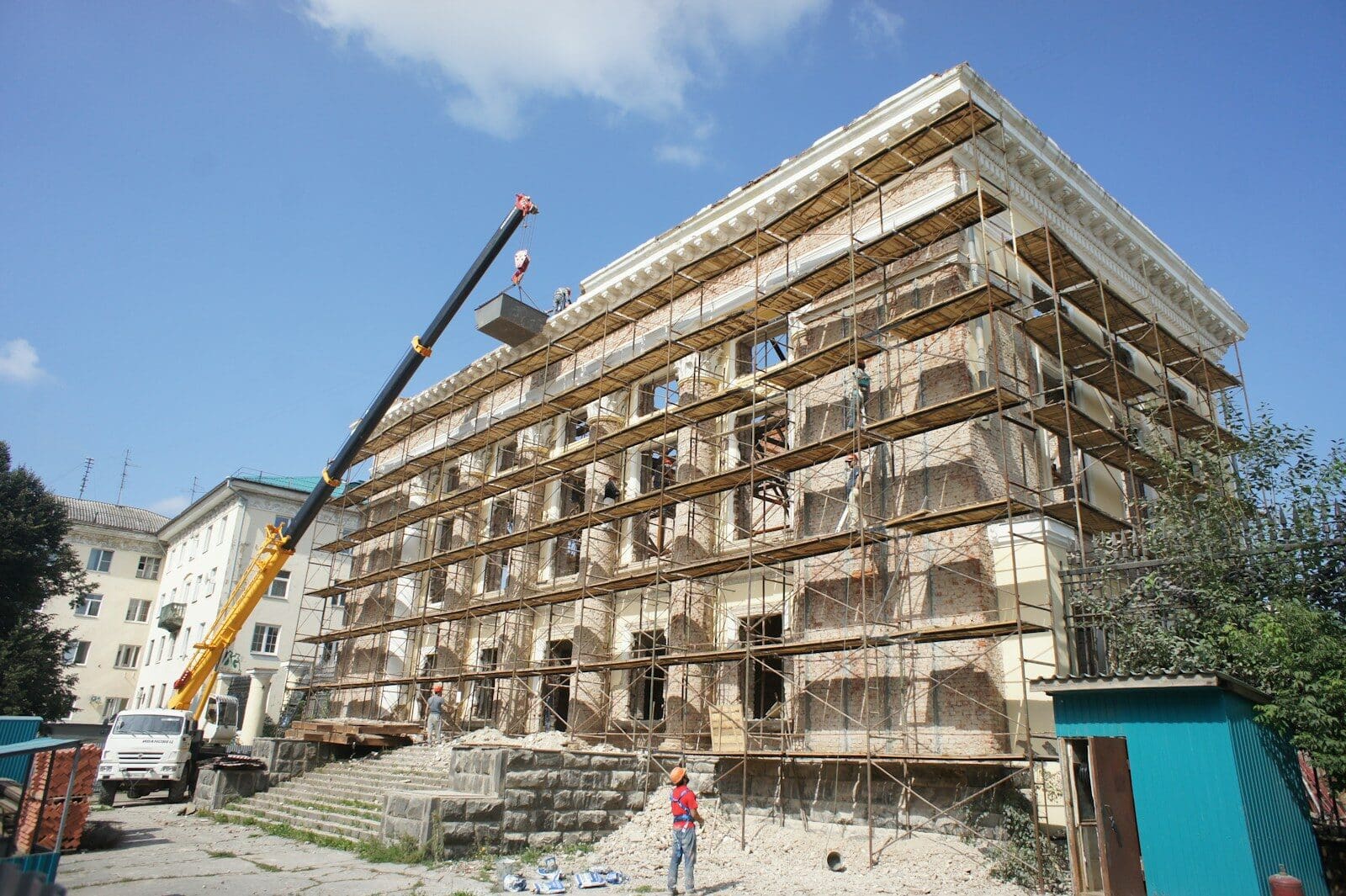
Photo by Boris Busorgin on Unsplash
What Is Commercial Building Construction?
Commercial building construction is the process of building, renovating, expanding, or improving properties used for business, institutional, public, or income-producing purposes.
Commercial buildings can include:
- Office buildings
- Retail stores
- Strip malls
- Retail centers
- Healthcare facilities
- Senior living communities
- Educational buildings
- Hospitality properties
- Government buildings
- Industrial buildings
- Manufacturing facilities
- Distribution centers
- Mixed-use spaces
- Interior build-outs
- Additions, such as a new wing
- Adaptive reuse of an existing structure
Commercial construction is different from residential construction because commercial projects often involve larger teams, stricter code compliance, more complex systems, heavier materials, more detailed schedules, and greater operational considerations.
For example, a commercial project may need to account for fire resistance, energy efficiency, accessibility, zoning ordinances, plumbing systems, structural integrity, curtain walls, natural light, traffic flow, environmental impact, and business operations that may continue during construction.
At SCIC, we specialize in projects where safety, compliance, and minimal disruption are critical. That makes planning and coordination essential from the very beginning.
Understanding the Commercial Construction Process
The commercial construction process usually happens in several major phases. Each phase builds on the one before it, and each one needs strong project management.
A typical commercial construction process includes:
- Development and planning phase
- Pre-construction phase
- Procurement phase
- Construction phase
- Post-construction phase
Some projects are small-scale construction jobs, such as an interior build-out or focused renovation. Others are large-scale construction projects, such as new construction, major additions, healthcare improvements, or full building transformations.
No matter the size, the process needs structure.
When the project team understands the full construction process, decisions become clearer. The owner knows what to expect. The design team can coordinate more effectively. The general contractor can plan labor, materials, safety, and scheduling. Subcontractors can prepare properly. The client can move forward with confidence.
The Commercial Building Construction Process Starts With Planning
The commercial building construction process starts long before construction begins. The development and planning phase is where the owner, construction partner, design team, and key stakeholders define the vision, goals, budget, schedule, and requirements.
This early planning may include:
- Site evaluation
- Soil testing
- Project feasibility
- Budget development
- Schedule planning
- Zoning ordinances review
- Local building codes review
- Existing structure assessment
- Space planning
- Material selection
- Sustainable construction goals
- Energy-efficient systems planning
- Risk management
- Project team selection
This phase helps answer important questions.
What is the building supposed to accomplish? What business operations need to be protected? What code compliance requirements apply? What building types or construction methods make the most sense? What risks could affect cost or schedule? What will the project require once construction begins?
At SCIC, we use this phase to create clarity. The more we understand up front, the better we can guide the entire project.

Photo by Craftsman Concrete Floors on Unsplash
Pre-Construction Phase: Setting Up the Commercial Project for Success
The pre-construction phase is one of the most important parts of any commercial building project. This is where the project moves from concept into practical planning.
During pre-construction, we help clients evaluate:
- Project scope
- Construction requirements
- Budget and cost efficiency
- Construction schedule
- Site preparation
- Procurement needs
- Subcontractor coordination
- Code compliance
- Building materials
- Structural systems
- Safety planning
- Quality control
- Phasing
- Occupied renovation needs
For occupied properties, this phase becomes even more important. In healthcare facilities, senior living communities, schools, hotels, retail centers, and office buildings, construction work may need to happen while people continue using the space.
That means we must plan around residents, patients, guests, staff, students, tenants, customers, and daily business operations.
Our team thinks through access routes, temporary barriers, dust control, noise control, emergency access, work hours, deliveries, and communication before work begins. That careful planning helps reduce disruption and protect safety.
Commercial Construction Projects Require the Right Project Team
Every successful commercial construction project depends on the right project team.
A strong project team may include:
- Building owner
- General contractor
- Project manager
- Construction managers
- Safety manager
- Architect
- Structural engineers
- Mechanical engineers
- Electrical engineers
- Plumbing professionals
- Interior designers
- Subcontractors
- Inspectors
- Facility managers
- Property managers
- Owner representatives
Each person plays a role, but the team needs clear leadership. Without coordination, even experienced professionals can end up working from different assumptions.
At SCIC, our single-source model gives clients one accountable construction partner from early planning through completion. That helps reduce confusion, improve communication, and keep the project moving.
We see our role as more than managing tasks. We manage relationships, expectations, risk, schedules, quality, and the client experience.
The Role of a General Contractor in Commercial Construction
A general contractor is responsible for managing the day-to-day construction process and coordinating the work needed to complete the project.
As a general contractor, we may oversee:
- Subcontractor scheduling
- Site preparation
- Material deliveries
- Safety requirements
- Quality control
- Inspections
- Construction documentation
- Change management
- Project communication
- Budget tracking
- Field coordination
- Final closeout
Commercial construction companies need to understand both the big picture and the fine details. A missed delivery, unclear scope item, delayed inspection, or poorly coordinated trade can affect the entire schedule.
At SCIC, we bring decades of experience across diverse sectors. We know how to manage complex environments, communicate clearly with stakeholders, and keep the project aligned with client goals.
That is one reason more than 90% of our business comes from repeat clients.
Building Types in the Commercial Construction Industry
The commercial construction industry includes many building types, and each one has different needs.
Healthcare Facilities
Healthcare facilities require strict attention to safety, infection control, regulatory compliance, accessibility, and operational continuity. Construction must often happen with zero downtime or carefully phased work.
Senior Living Communities
Senior living projects require a special level of care. Residents may remain in the building during construction, so safety, communication, comfort, and minimal disruption are essential.
Office Buildings
Office buildings may need modern layouts, energy-efficient systems, updated finishes, flexible work areas, improved natural light, and upgraded mechanical or plumbing systems.
Retail Centers and Retail Stores
Retail construction often focuses on customer flow, brand experience, quick turnaround, tenant coordination, and minimizing disruption to surrounding businesses.
Hospitality Properties
Hotels, resorts, and restaurants need stylish, efficient renovations that protect the guest experience while improving function and appearance.
Industrial Buildings and Distribution Centers
Industrial buildings, manufacturing facilities, and distribution centers often require durable materials, large open spans, loading areas, utility coordination, and efficient site logistics.
Government Buildings and Institutional Spaces
Government buildings, schools, and other institutional spaces often require careful planning around public use, accessibility, security, code compliance, and long-term durability.
Understanding the building type helps the project team make better decisions about design, construction methods, materials, schedule, safety, and budget.
Building Construction Methods and Structural Systems
Commercial building construction can use different structural systems depending on the project goals, budget, building type, and site conditions.
Common construction methods and structural systems include:
- Steel framing
- Reinforced concrete
- Wood framing
- Wood frame construction
- Pre-engineered metal buildings
- Concrete and masonry systems
- Structural frame systems
- Curtain walls
- Exterior wall assemblies
Steel framing is common in many commercial buildings because it offers strength, flexibility, and the ability to support larger spans. Reinforced concrete may be used for foundations, slabs, structural elements, and buildings that require strong fire resistance or durability. Wood frame construction may be used in certain small-scale commercial or mixed-use projects, depending on code requirements and building size.
Pre-engineered metal buildings can be a cost-efficient option for some industrial buildings, warehouses, and manufacturing facilities.
The right structural frame affects the building’s structure, cost, construction schedule, material selection, and long-term performance. That is why structural engineers, architects, and construction managers must coordinate early.
Site Preparation Before Breaking Ground
Before breaking ground, site preparation must be handled carefully. This phase creates the foundation for the work that follows.
Site preparation may include:
- Surveying
- Soil testing
- Demolition
- Clearing
- Grading
- Utility coordination
- Temporary access routes
- Erosion control
- Site fencing
- Staging areas
- Safety planning
- Excavation
- Preparing for foundations
For a new construction project, site preparation helps make sure the land can support the building. For renovations or additions, the team must evaluate how the new work connects to the existing structure.
If site preparation is rushed, problems can show up later during foundations, utility work, drainage, or structural installation. That can create delays and added costs.
At SCIC, we look at site preparation as part of the larger construction strategy.

Photo by Becca Tapert on Unsplash
The Construction Phase: Where Planning Becomes Progress
The construction phase is when the building process becomes visible. Crews mobilize, materials arrive, equipment is used, and the project begins taking shape.
Depending on the project, the construction phase may include:
- Site work
- Pouring concrete
- Foundations
- Structural frame installation
- Steel framing
- Exterior walls
- Roofing
- Curtain walls
- Mechanical systems
- Electrical systems
- Plumbing systems
- Fire protection
- Interior build-outs
- Finishes
- Inspections
- Punch list work
During this phase, project management is critical. The project manager and construction managers must coordinate the project team, manage schedule updates, monitor quality control, track costs, and communicate with the owner.
This is also when risk management becomes very active. Weather, material delays, existing conditions, labor coordination, and approved changes can all affect the construction phase.
Strong leadership helps keep the project moving.
Managing Budgets, Schedules, and Procurement
Commercial construction requires constant attention to budget, schedule, and procurement.
A commercial building project can involve hundreds or thousands of decisions. Materials need to be selected, priced, ordered, delivered, stored, and installed in the right sequence.
The procurement phase may include:
- Finalizing material selection
- Ordering long-lead items
- Coordinating delivery dates
- Reviewing substitutions
- Tracking shipping timelines
- Managing supplier communication
- Confirming storage needs
- Protecting materials on site
Budget control also matters throughout the entire process. Construction costs can be affected by labor availability, material pricing, design changes, code requirements, site conditions, and schedule pressures.
At SCIC, we focus on clear communication and early planning to help clients manage these realities. Our goal is always to protect quality while keeping the project aligned with the agreed scope, schedule, and budget.
Quality Control and Code Compliance
Quality control is not something that happens only at the end of a project. It needs to happen throughout the construction process.
Quality control may include:
- Reviewing construction documents
- Verifying material standards
- Monitoring workmanship
- Coordinating inspections
- Confirming code compliance
- Reviewing fire resistance requirements
- Checking accessibility requirements
- Confirming structural integrity
- Managing punch list items
- Documenting progress
- Addressing deficiencies quickly
Local building codes, zoning ordinances, ADA requirements, OSHA standards, fire codes, and sector-specific regulations all influence commercial building construction.
For healthcare facilities, senior living communities, schools, and public-facing buildings, compliance is especially important. Safety and regulatory requirements must be built into the project, not added at the last minute.
At SCIC, safety and compliance are central to how we manage projects.
Sustainable Construction and Energy Efficiency
Many commercial building owners are thinking more seriously about sustainable construction, energy efficiency, and long-term operating costs.
Sustainable construction may involve:
- Energy-efficient systems
- Better insulation
- Efficient plumbing systems
- Durable materials
- Improved natural light
- Reduced construction waste
- Better building envelope performance
- Smart HVAC systems
- Lower environmental impact
- Long-term maintenance planning
Energy efficiency is not only about sustainability. It can also affect operating costs, occupant comfort, tenant satisfaction, and long-term asset value.
During planning and pre-construction, we help clients consider how material selection, systems, design decisions, and construction methods may support better building performance.
Managing Commercial Construction in Occupied Buildings
Some of the most complex commercial construction projects happen inside occupied buildings.
At SCIC, occupied renovations are one of our specialties. We understand that construction cannot stop the daily life of a senior living community, healthcare facility, school, hotel, office building, or retail center.
Occupied work requires planning around:
- Safety
- Access
- Noise
- Dust
- Work hours
- Temporary barriers
- Emergency routes
- Infection control when needed
- Guest, resident, patient, student, staff, or customer movement
- Clear communication
- Phased construction
- Daily cleanup
- Operational continuity
This is where our experience truly matters. We know how to plan work so the building can continue functioning while improvements are underway.
The goal is not just to finish the job. The goal is to finish it safely, professionally, and with minimal disruption.
Post-Construction Phase and Final Closeout
The post-construction phase is where the project transitions from active work to completed space.
This phase may include:
- Final inspections
- Punch list completion
- Owner walkthroughs
- Closeout documentation
- Warranty information
- Operations and maintenance manuals
- Final cleaning
- Training for building systems
- Turnover coordination
- Post-construction support
A project is not truly complete until the owner has what they need to use, maintain, and protect the investment.
At SCIC, we believe in going beyond completion. Our post-construction services and maintenance support help clients protect long-term value and move forward with confidence.
How SCIC Manages Commercial Construction Projects Successfully
At South Coast Improvement Company, we manage commercial construction projects through clarity, accountability, and disciplined execution.
Our approach includes:
- Pre-construction planning
- Design-build support
- Construction management
- General contracting
- Site logistics planning
- Budget and schedule management
- Safety-first execution
- Quality control
- Occupied renovation expertise
- Regulatory compliance
- Clear communication
- Post-construction support
We are a family-founded construction company, and we believe relationships matter. Our clients trust us because we show up, communicate clearly, solve problems, and deliver results.
With over 90% repeat business, our track record reflects the way we work. We are not an impersonal national contractor. We are a trusted construction partner focused on helping clients build with confidence.
Final Thoughts on Commercial Building Construction
Commercial building construction requires more than materials, crews, and equipment. It requires planning, leadership, communication, compliance, quality control, and an experienced team that understands how to manage complexity.
From the development and planning phase to the pre-construction phase, procurement phase, construction phase, and post-construction phase, every step affects the success of the project.
At SCIC, we help owners, developers, property managers, and institutional leaders manage commercial construction with confidence. Whether you are planning new construction, renovating an existing structure, expanding a facility, improving office buildings, upgrading retail centers, or managing complex occupied work, we are ready to help you move forward.
Work with a Trusted Construction Partner.
Helpful Links and Resources | Commercial Building Construction
- Occupational Safety and Health Administration (OSHA): Stay updated on workplace safety standards and regulations for construction projects. OSHA provides guidelines, training, and resources to ensure a safe working environment. Visit OSHA
- American Institute of Architects (AIA): Explore design standards, architectural resources, and best practices for commercial building projects. AIA offers valuable insights for architects and builders alike. Visit AIA
- National Institute of Building Sciences (NIBS):Access resources on building science, sustainability, and innovative construction practices. NIBS provides tools and research to improve building performance. Visit NIBS
- U.S. Green Building Council (USGBC): Learn about LEED certification and sustainable building practices. USGBC offers resources to help integrate eco-friendly solutions into commercial construction. Visit USGBC
- Construction Specifications Institute (CSI): Find tools and resources for creating accurate and effective construction specifications. CSI supports professionals in improving project delivery. Visit CSI
- Building Owners and Managers Association (BOMA): Discover resources for property management, building operations, and industry standards. BOMA is a great resource for commercial building owners and managers. Visit BOMA
- National Fire Protection Association (NFPA): Access fire safety codes, standards, and resources to ensure compliance and safety in commercial buildings. NFPA is a trusted authority in fire prevention. Visit NFPA

