
Affordable housing is housing that costs no more than 30% of a household’s gross income, including rent or mortgage payments plus utilities. It serves families across a wide range of income levels—from emergency shelters and public housing to workforce housing and affordable homeownership—and helps keep communities stable, diverse, and economically healthy.
Affordable housing has moved to the top of the agenda for communities, developers, municipalities, and investors. Rising rents, climbing construction costs, and a widening gap between wages and home prices have made the question more urgent than ever: how do we build and preserve housing that working families can actually afford?
View Our Work
Explore some of South Coast Improvement Company’s latest construction and renovation projects.

The Fairmont by Barclay House
A Refreshed Senior Living Environment Designed to Elevate Everyday Spaces While Supporting Comfort, Connection, and the Resident Experience.…
View Project
CareOne at Livingston
Resident Room Turns & Interior Renovations within an Occupied Healthcare Community. South Coast Improvement Company partnered with CareOne…
View Project
CareOne at River Glen
Comprehensive Interior Renovation Across a 55,000 SF Occupied Healthcare Facility. South Coast Improvement Company completed a comprehensive renovation…
View ProjectThe answer is rarely simple. Affordable housing projects sit at the intersection of tight budgets, complex regulations, demanding timelines, and real community needs. A single misstep on funding or compliance can stall a project for months.
That’s where experienced partners matter. At South Coast Improvement Company (SCIC), a family-founded commercial contractor, we’ve delivered affordable housing renovations, occupied rehabs, and new construction with minimal disruption to residents. We know firsthand that successful projects depend on strategic planning, regulatory expertise, and a construction partner you can trust.
This guide breaks down what affordable housing really means, why it matters, the construction challenges involved, and how the right approach turns difficult projects into lasting community assets.

Photo by Towfiqu barbhuiya on Unsplash
What Is Affordable Housing?
Affordable housing is defined by two things: income standards and housing costs. The most widely used benchmark comes from the U.S. Department of Housing and Urban Development (HUD): housing is considered affordable when a household spends no more than 30% of its gross income on housing costs. Households that pay more than that threshold are considered “cost-burdened.” Today, roughly 70% of low-income households in the United States pay more than 30% of their income on housing—a stark reminder of how far demand outpaces supply.
According to HUD’s official affordability guidelines, millions of American families spend well above this threshold, which underscores why affordable housing remains a national priority.
Housing costs include more than just rent or a mortgage payment. They also cover utilities, property taxes, and insurance. That’s why affordability is always measured against total housing expenses, not just the headline rent figure.
Affordability is closely tied to area median income (AMI), a figure HUD calculates each year for every region in the country. Rent limits, mortgage qualifications, and program eligibility are usually set as a percentage of AMI. Programs typically target households earning anywhere from roughly 30% to 120% of AMI, depending on the specific program and the community’s needs. A unit affordable to a household earning 50% of AMI looks very different from one aimed at households earning 80% of AMI.
There’s also a clear line between market-rate housing and affordable housing. Market-rate units are priced by supply and demand with no income restrictions. Affordable units, by contrast, carry rent caps or income requirements designed to keep them within reach of specific income groups.
Affordable housing can be rental or for sale, subsidized or unsubsidized. It comes in many forms:
- Emergency shelters — short-term housing for individuals and families in crisis, providing safety and stability as a first step.
- Public housing — government-owned housing for low-income families, managed by local housing authorities, where rent is typically set at 30% of the tenant’s income.
- Affordable rental housing — apartments with rents capped based on income limits.
- Supportive housing — affordable units paired with services for residents who need extra support, such as people exiting homelessness.
- Workforce housing — units aimed at middle-income earners like teachers, nurses, and first responders who often earn too much for subsidies but too little for market rents.
- Naturally occurring affordable housing (NOAH) — older, unsubsidized buildings that remain affordable because of their age, condition, or location.
- Affordable homeownership — subsidized or income-restricted purchase programs that help lower-income buyers build equity and long-term stability.
- Starter homes — modestly priced homes designed to help first-time buyers enter the market.
Across all these types, two characteristics remain constant: quality and safety. Affordable housing is not substandard housing. It must meet building codes, health standards, and accessibility requirements—and it should be located near transportation and jobs so that residents can access opportunity, not just a roof.
Understanding Housing Affordability Across Income Levels
Affordability isn’t one-size-fits-all. Programs and projects are designed around different income levels, each defined relative to area median income:
- Moderate-income households typically earn between 80% and 120% of AMI. They often struggle to afford market-rate housing but earn too much for most subsidies.
- Low-income families generally fall between 50% and 80% of AMI and qualify for many affordable housing programs.
- Very low- and extremely low-income households sit below 50% of AMI and are the primary focus of public housing and deep-subsidy programs.
Understanding where a household falls on this scale determines which programs apply and how a project should be structured. For a deeper look at how these income tiers are calculated, the Urban Institute’s research on housing affordability offers excellent data-driven analysis.
Affordable Housing vs. Subsidized Housing: What’s the Difference?
People often use “affordable housing” and “subsidized housing” interchangeably, but they aren’t the same thing.
Affordable housing is a broad category that includes any housing kept within reach of specific income groups—sometimes through private financing alone, with no government money involved.
Subsidized housing is a subset where public funding directly lowers the cost for tenants. Common forms include:
- Housing Choice Vouchers, also known as Section 8, which help eligible renters pay for housing in the private market. More than 5 million households across the country rely on this program today. The Housing Choice Voucher Program is administered by local housing authorities.
- Project-based Section programs, where the subsidy is tied to a specific building rather than the tenant.
- The Low-Income Housing Tax Credit (LIHTC), the single largest driver of new affordable housing construction in the country, which incentivizes private developers to build and preserve income-restricted units.
- Rental assistance, which covers part of a household’s rent so they pay only a set share of their income.
A local housing authority usually manages these programs, determines eligibility, and connects qualified households with available units. So while all subsidized housing is affordable, not all affordable housing is subsidized.
Planning a project that involves these programs? Explore SCIC’s Construction Management Services and Property Assessments to make sure your build aligns with funding and compliance requirements.

Photo by Artful Homes on Unsplash
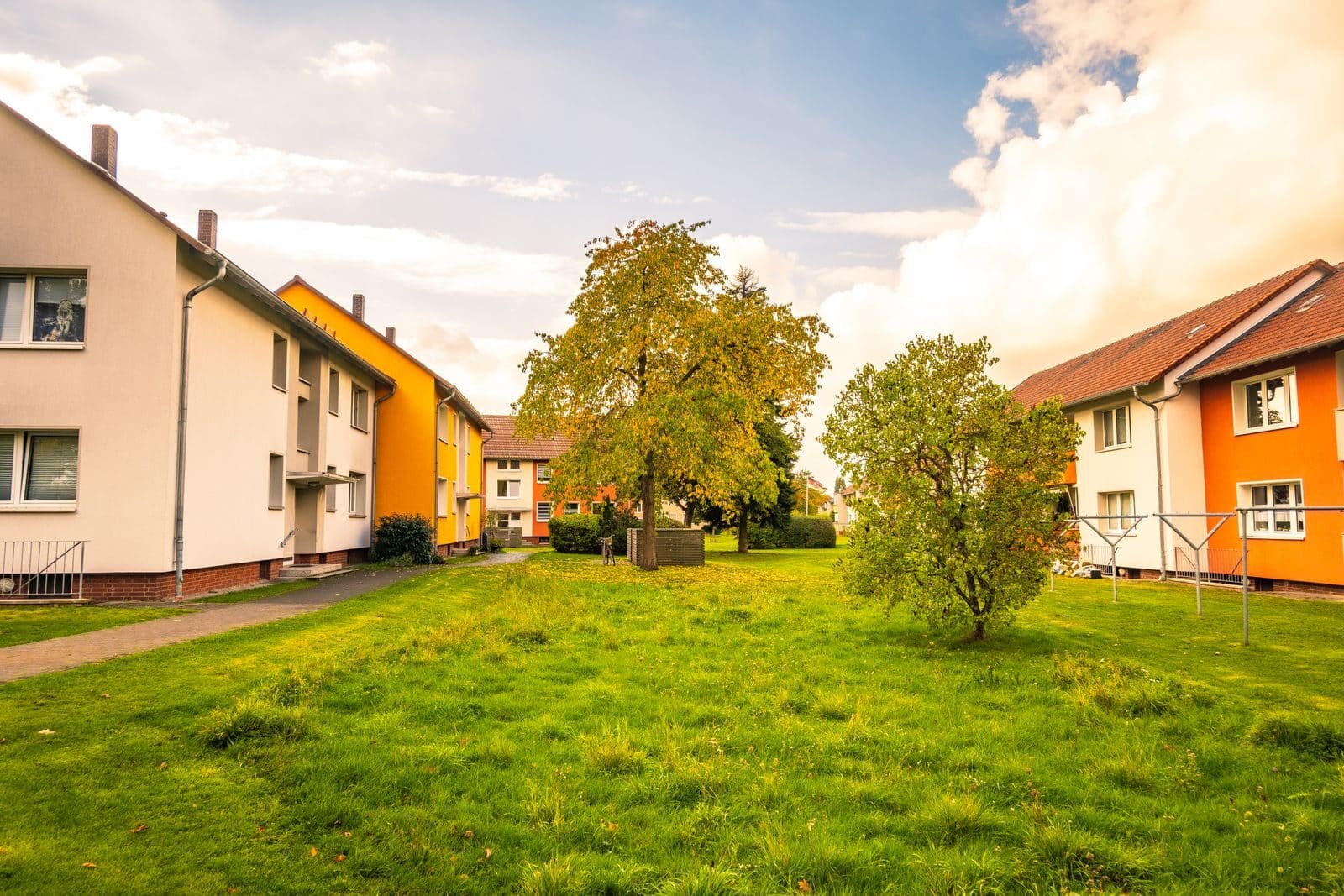
Photo by Omar Aboud on Pexels
Why Affordable Housing Matters for Communities
Affordable housing does far more than put roofs over heads. When families have stable, safe, and affordable places to live, the benefits ripple across every corner of a community.
Stable housing improves health outcomes. Families who aren’t spending an outsized share of income on housing can afford better food, medical care, and mental health support. Housing instability, by contrast, is a direct driver of emergency room visits, chronic stress, and worse long-term health—costs that ultimately fall on public systems. Affordable housing reduces those public costs associated with both homelessness and healthcare.
Children in stable, affordable housing perform better in school. Research consistently shows that housing stability supports better concentration, lower absenteeism, and stronger academic outcomes. When families aren’t moving frequently because of rent increases or evictions, children build the kind of consistency that drives educational success.
Affordable housing also reduces the financial strain on low-income families in ways that extend well beyond housing costs. When rent consumes less than 30% of income, families have resources left for savings, job training, childcare, and other pathways to upward mobility. Over time, that translates into real increases in economic mobility for families across generations.
How Affordable Housing Builds Stronger Local Economies
Housing and jobs are deeply connected. When workforce housing is scarce, employers struggle to fill positions because workers simply can’t afford to live nearby. Long commutes follow, turnover rises, and local economies suffer. Communities with affordable housing attract more diverse workforces, giving employers better access to talent at every income level.
Affordable housing development itself stimulates local economies. Construction projects create jobs, generate tax revenue, and support local suppliers and contractors. Once residents move in, lower housing costs free up household income that gets spent at nearby shops, restaurants, and services—strengthening the economic fabric of the neighborhood.
Local governments increasingly treat affordable housing as a tool for neighborhood prosperity and economic development. The development of new affordable units contributes to more stable, vibrant communities by reducing vacancy, improving surrounding property values, and promoting socioeconomic diversity within neighborhoods.
The National Low Income Housing Coalition publishes detailed research showing how the shortage of affordable rental homes affects local and national economies—a useful resource for anyone making the economic case for new development.
The Role of Rental Housing and Urban Development Programs
Public funding is the backbone of most affordable housing. Several major mechanisms help close the gap between what it costs to build and what residents can afford to pay:
- HUD initiatives and broader Department of Housing programs provide grants, vouchers, and operating support.
- Federal government funding flows to states and municipalities to expand and preserve affordable stock.
- The Low-Income Housing Tax Credit (LIHTC) incentivizes private investment to create new affordable housing units across the country.
- Gap financing fills the space between conventional loans and total project costs.
These funding sources are what make most affordable developments financially feasible. Developers who understand how to combine them—and build to their requirements—are far more likely to succeed. The Local Initiatives Support Corporation (LISC) is a strong resource for understanding how these financing tools come together on real projects.
Naturally Occurring Affordable Housing and Existing Buildings
Not all affordable housing has to be built from scratch. Some of the most cost-effective gains come from preserving what already exists.
Naturally occurring affordable housing—older buildings that remain affordable without subsidies—represents a huge share of the nation’s affordable stock. When these buildings deteriorate, they’re often demolished or renovated into market-rate or luxury units, permanently removing affordable homes from the community. That loss hits hardest in neighborhoods close to transit and employment centers, where affordability and accessibility to transportation and jobs is most critical.
Renovation rather than new development can preserve this housing at a fraction of the cost. Thoughtful rehabs support sustainable urban development, deliver cost-effective community improvements, and keep residents in place rather than displacing them.
Did You Know? Renovating existing rental housing can often preserve naturally occurring affordable housing while reducing construction costs and minimizing neighborhood disruption.
Construction Challenges in Affordable Housing Projects
Building affordable housing involves far more than putting up walls. It requires balancing budgets, regulations, timelines, and community expectations—all at once, and often under intense scrutiny.
Working Within Limited Funding and Tight Budgets
Money is the defining constraint in affordable housing. Projects typically stitch together multiple funding sources—tax credits, gap financing, federal and state funds, and private market partnerships—each with its own rules and reporting requirements.
Managing construction costs against these layered budgets takes real discipline. Every dollar has to stretch, and unexpected overruns can jeopardize the entire financing package. High labor costs are a significant driver of those overruns; construction wages and materials prices have climbed sharply in recent years, making it harder to deliver affordable units without creative cost management and value engineering.
In some markets, development costs have grown so steep that they exceed what the market can reasonably support—meaning even well-structured projects can struggle to pencil out without additional subsidy or creative financing. This is where experienced cost control and value engineering make the difference between a project that moves forward and one that stalls.
Navigating Lengthy Public Processes and NIMBYism
Affordable housing projects routinely face extended timelines before a single shovel hits the ground. Zoning approvals, environmental reviews, permitting, and public comment periods can stretch for years. Each step adds time and cost, compressing the financial feasibility of projects that are already operating on thin margins.
Community opposition—often called NIMBYism (Not In My Backyard)—adds another layer of difficulty. Despite the well-documented benefits of affordable housing, proposed developments frequently encounter resistance from nearby residents concerned about neighborhood character, traffic, or property values. Navigating that opposition requires patience, community engagement, and clear communication about the real impact of affordable housing on neighborhoods.
These delays compound regulatory compliance challenges: the rules that apply when a project is first designed may have changed by the time it reaches construction.
Renovating Occupied Buildings with Minimal Disruption
Many affordable housing projects involve renovating buildings where people still live. That changes everything.
Resident safety becomes the top priority. Work has to be carefully scheduled, often in phases, so that residents always have safe access to their homes, utilities, and exits. Clear communication plans keep tenants informed about what’s happening and when. Throughout it all, crews must maintain ADA accessibility and OSHA safety compliance.
Occupied renovations are a specialty in their own right—and getting them wrong creates risk for residents and owners alike.
Meeting Regulatory Compliance Throughout the Development Process
Affordable housing is one of the most heavily regulated types of construction. Projects must satisfy local governments, Department of Housing requirements, and the specific rules of each housing program funding the work.
Compliance touches nearly everything: confirming eligible tenants, meeting environmental standards, and hitting accessibility requirements. Missing a single benchmark can delay funding or trigger costly rework. Staying compliant from design through completion demands deep familiarity with the development process.
Balancing Cost, Quality, and Long-Term Value
The cheapest building rarely turns out to be the most affordable over time. Cutting corners during construction usually means higher maintenance and repair costs down the road—and it undermines the quality and safety standards that make affordable housing worth building in the first place.
Smart affordable housing development balances upfront cost with long-term value through sustainable construction, energy-efficient upgrades, and durable materials. These choices reduce maintenance costs, lower utility bills for residents, and deliver better long-term investment performance for owners. The U.S. Department of Energy’s Better Buildings initiative offers practical guidance on energy-efficient upgrades that pay off over a building’s lifetime.
Featured Insight: “As a family-founded commercial contractor, we’ve seen firsthand that successful affordable housing projects aren’t built by cutting corners—they’re built through careful planning, experienced project management, and collaboration from design through completion.

How SCIC Supports Complex Housing and Renovation Projects
Understanding the challenges is one thing. Solving them consistently is another. South Coast Improvement Company has built its reputation on delivering complex housing and renovation projects that meet budget, schedule, and compliance demands.
Our Single-Source Construction Model
SCIC brings every phase of a project under one roof. Our single-source model covers pre-construction planning, design-build services, construction management, general contracting, and post-construction support.
This integrated approach gives clients one point of accountability instead of juggling separate designers and builders. The result is fewer conflicts, tighter coordination, and faster, more cost-effective delivery—exactly what budget-sensitive affordable housing projects need.
Specialized Expertise in Occupied Renovations
Occupied renovations are one of SCIC’s core strengths. We’ve completed projects in senior living communities, multifamily housing, affordable rental housing, and mixed-use developments where residents remained in place throughout construction.
Our minimal disruption strategies—careful phasing, clear scheduling, and constant communication—keep residents safe and comfortable while work moves forward. That experience matters enormously in sensitive environments where downtime simply isn’t an option.
Safety, Compliance, and Long-Term Partnership
Every SCIC project is built on a foundation of OSHA compliance and ADA accessibility. Rigorous quality control and proactive risk management keep projects on track and on the right side of regulations.
Just as important, we believe in transparent communication. Clients always know where their project stands, what comes next, and how we’re managing budget and schedule.
Why More Than 90% of Our Clients Return
The clearest measure of our work is that more than 90% of our clients come back for their next project.
That loyalty comes from our family-founded values: accountability, proven project delivery, on-time performance, and disciplined budget management. We don’t see projects as one-off transactions. We build long-term relationships—and that mindset shows up in everything we deliver.
Frequently Asked Questions
What are the requirements for affordable housing in California?
Requirements for affordable housing in California vary by city and county. Eligibility is generally based on area median income, with limits set by household size. Many cities use inclusionary zoning rules that require new developments to include a share of affordable units, and state regulations add another layer of requirements. Because the rules differ so much by location, the best step is to consult your local housing authority for project-specific guidance.
What is the biggest issue with affordable housing?
The biggest issue with affordable housing is the persistent gap between what it costs to build and what residents can afford to pay. High labor costs, limited funding sources, lengthy public approval processes, NIMBYism, market speculation, and scarce buildable land all push costs up, while housing demand keeps growing. No single factor causes the shortage—it’s the combination that makes affordable housing so hard to deliver at scale.
Who qualifies for affordable housing in NJ?
In New Jersey, qualification is based primarily on household income relative to area median income, adjusted for household size. Income limits determine eligibility for affordable rental housing and subsidized programs. Applicants typically apply through a local housing authority or the agency managing a specific development, which verifies income and household details before placing applicants on waiting lists or offering units.
What qualifies as affordable housing in Chicago?
In Chicago, affordable housing is priced according to local income guidelines tied to area median income. The city runs several affordability programs, including workforce housing initiatives and rental assistance options. Subsidized housing and Housing Choice Voucher programs also expand access for lower-income residents. Exact qualifications depend on the specific program, so checking with the city’s housing department or a local housing authority is the most reliable approach.
Building Stronger Communities, One Project at a Time
Affordable housing is housing that families can pay for without sacrificing other essentials—defined by income standards and the 30% threshold that separates stable households from cost-burdened ones. It spans everything from emergency shelters and public housing to workforce units and affordable homeownership, and it plays a vital role in creating stronger, more resilient communities. It supports local economies, reduces public costs, keeps neighborhoods stable, promotes socioeconomic diversity, and gives families and seniors a secure place to build their lives.
But delivering it well is hard. Successful affordable housing development requires experienced planning, deep regulatory knowledge, and construction expertise that can balance cost, quality, and resident safety—while managing the real challenges of lengthy approvals, high labor costs, and community opposition. The projects that succeed are the ones built with care, not corners.
South Coast Improvement Company brings all of that to the table. As a trusted, family-founded partner, we specialize in occupied renovations, new construction, and long-term property improvements that prioritize safety, quality, and minimal disruption.
Ready to build or renovate with confidence? Request a free consultation and discover why over 90% of our clients choose to partner with South Coast Improvement Company again and again.

