
At South Coast Improvement Company, we’ve learned that a successful construction project isn’t just measured by the final result. It’s measured by how you get there. For decades, we’ve seen firsthand that a well-managed, safe jobsite is the bedrock of a project that finishes on time and within budget. Prioritizing construction site safety is more than a regulatory requirement; it’s a core business strategy that protects construction workers, clients, and your bottom line. It’s a non-negotiable part of our culture, especially when working in occupied spaces where precision and care are paramount.
Jobsite safety is directly tied to timelines and financial outcomes. An accident can cause cascading delays, lead to costly fines, and damage your organization’s reputation. That’s why we believe a proactive approach to safety isn’t just good practice—it’s smart business.
View Our Work
Explore some of South Coast Improvement Company’s latest construction and renovation projects.

The Fairmont by Barclay House
A Refreshed Senior Living Environment Designed to Elevate Everyday Spaces While Supporting Comfort, Connection, and the Resident Experience.…
View Project
CareOne at Livingston
Resident Room Turns & Interior Renovations within an Occupied Healthcare Community. South Coast Improvement Company partnered with CareOne…
View Project
CareOne at River Glen
Comprehensive Interior Renovation Across a 55,000 SF Occupied Healthcare Facility. South Coast Improvement Company completed a comprehensive renovation…
View Project
Photo by Emilio Williams on Unsplash
1. Understanding Construction Site Safety as a Core Project Strategy
We treat safety not as a checklist, but as a strategy that begins long before the first hammer swings. During pre-construction, we integrate safety planning into every decision, from site logistics to scheduling. This proactive stance is proven to reduce workplace injuries, including serious and even fatal injuries. For us, a strong safety program is fundamental to minimizing disruption, which is crucial when we perform renovations in active senior living, healthcare, and educational facilities.
2. Identifying Common Safety Concerns Early
One of the most effective ways to prevent accidents is to anticipate them. We start every project by identifying the common construction site hazards that construction workers face. These potential hazards can include fall risks from elevated platforms, dangers associated with heavy machinery, unsafe conditions like cluttered walkways, and risks from power tools, electric shock, loud noise, and heavy lifting. By pinpointing these safety concerns early, we can implement controls that prevent costly delays and keep the project moving forward smoothly.
3. Creating a Comprehensive Safety Plan for Every Jobsite
A one-size-fits-all approach to safety simply doesn’t work. We develop a customized safety plan for each construction project, tailored to its unique environment and challenges. This plan outlines critical details like site access points, material staging areas, clear communication protocols, emergency procedures, and site-specific rules. A detailed safety plan provides clarity for our construction managers, subcontractors, and our clients, ensuring everyone understands their role in maintaining a secure environment.
4. The Role of Personal Protective Equipment in Preventing Injuries
On our sites, appropriate personal protective equipment (PPE) is mandatory. There are no exceptions. This isn’t just about following rules; it’s about providing দলেরメンバーに an essential layer of defense against injury. Standard PPE on our construction operations includes hard hats, protective eyewear, high-visibility vests, gloves, and proper footwear. Depending on the task, we also require specialized gear like hearing protection and fall protection harnesses. Enforcing PPE use is a simple but powerful way to significantly reduce accidents.
5. Enforcing Clear Construction Safety Rules Every Day
Consistency is the key to a strong safety culture. We establish clear, written construction safety rules and hold our teams accountable to them every single day. This includes adhering to all federal and local guidelines, including OSHA regulations and standards from the Occupational Safety and Health Administration. Daily huddles and consistent oversight ensure that our safety standards are not just posted on a sign, but are actively practiced on the jobsite.
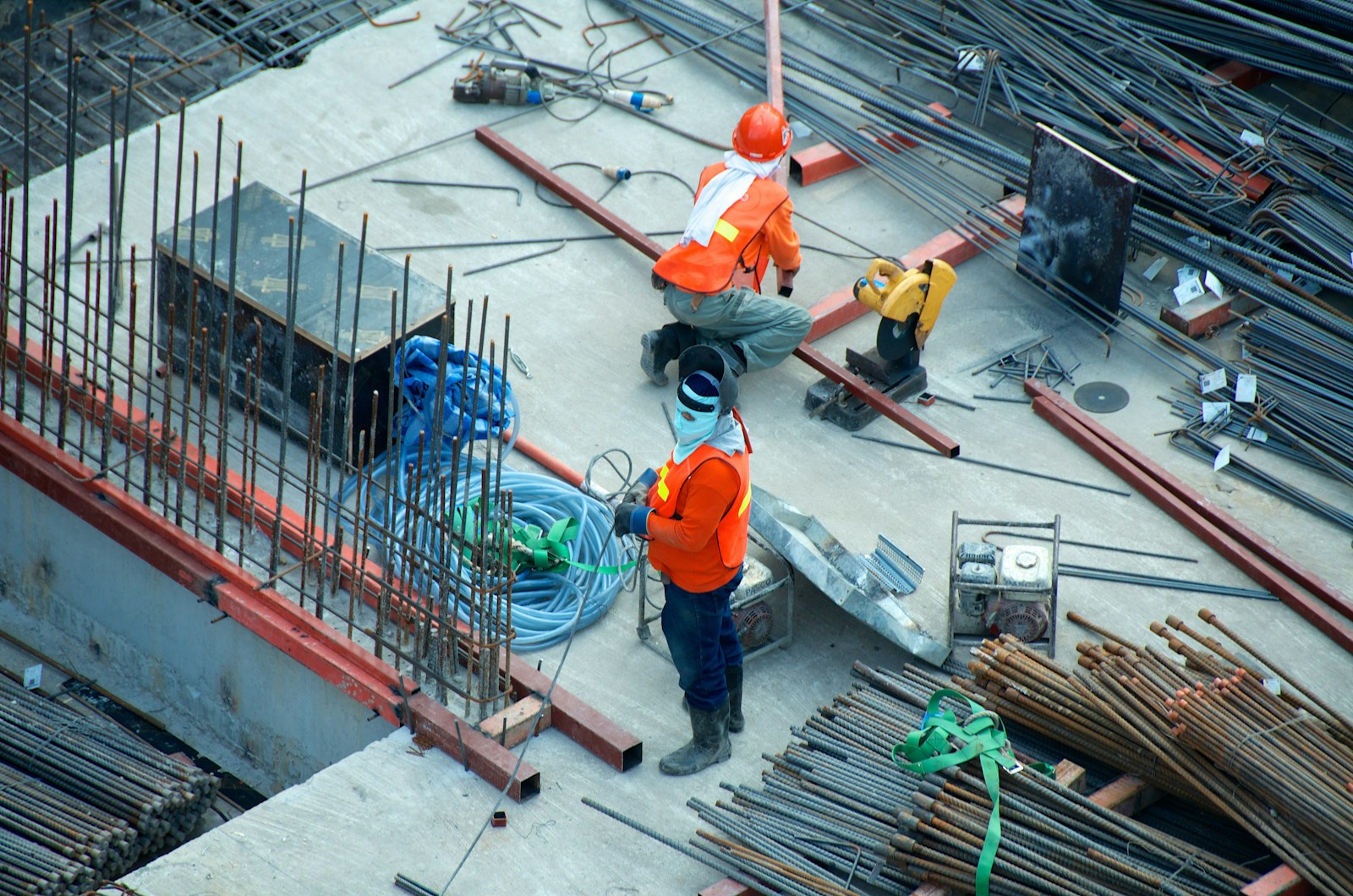
Photo by Etienne Girardet on Unsplash
6. Training and Ongoing Education That Keeps Teams Safe
A well-trained team is a safe team. We invest in ongoing training to help our workers recognize warning signs and identify unsafe equipment before it becomes a problem. This includes daily toolbox talks, safety huddles, and regular refreshers on operating heavy equipment, working near power lines, and using power tools. We believe that preventing unsafe behavior starts with building awareness and empowering every team member with the knowledge to work safely.
7. Inspecting Equipment Regularly to Avoid Costly Downtime
Faulty machinery is a major source of project delays and safety incidents. That’s why we ensure our teams inspect all equipment regularly. From large machinery like cranes and lifts to generators, scaffolding, and even hand tools, routine checks are essential. Poor maintenance not only harms construction workers but can bring a project to a halt. A proactive inspection schedule keeps our equipment running reliably and our people safe.
8. Addressing Unsafe Conditions Immediately
On a dynamic construction site, conditions can change quickly. We foster a culture where unsafe conditions are identified and corrected immediately. This can include anything from unstable surfaces and missing guardrails to exposed wiring or incomplete barricades. Our project managers are trained to spot these issues and take immediate action. This proactive correction protects our workers and prevents minor issues from derailing the project timeline.
9. The Importance of Strong Communication Across the Job Site
Clear and constant communication is the glue that holds a safe jobsite together. We streamline communication between our construction managers, subcontractors, and field teams using a combination of radios, clear signage, and daily walkthroughs. When everyone is on the same page, misunderstandings are avoided and teams can work together cohesively to ensure safety.
10. Using Fall Protection and Safety Nets for Elevated Work
Falls are one of the most serious safety hazards in our industry. We strictly adhere to all OSHA regulations regarding fall protection when work is performed at height. This includes the proper use of personal fall arrest systems (harnesses), guardrails, and safety nets. Proper training on scissor and boom lifts is also mandatory. By diligently protecting our workers at height, we prevent a leading cause of serious injuries.
11. Managing Heavy Machinery and Heavy Equipment Safely
The presence of heavy equipment requires heightened awareness and strict protocols. We ensure that only certified operators use heavy machinery and that daily inspections are completed without fail. We manage common risks like blind spots, tipping hazards, and potential power line contact through careful site planning and constant communication. Safely managing these powerful machines is critical to protecting the well-being of the entire crew and avoiding major project setbacks.
12. Integrating Technology to Improve Safety and Reduce Human Error
We leverage modern technology to enhance our safety measures. Tools like Building Information Modeling (BIM) allow us to plan for logistical challenges before we break ground. On-site, we use site cameras, digital safety-tracking software, and other innovations to monitor conditions and identify potential issues sooner. For our clients, the benefits are clear: this technology contributes to cost savings, faster timelines, and fewer disruptions.

Photo by Ricardo Gomez Angel on Unsplash
A Safer Job Site Protects Your Investment
Ultimately, a commitment to construction worker safety is a commitment to your project’s long-term success. When we follow proven construction safety tips and build strong safety precautions into every phase of the work, we reduce delays, prevent falls, and protect everyone on site. Our approach reflects decades in the construction industry and real insight from construction research, labor statistics, and day-to-day field experience.
We use the right equipment, enforce OSHA standards, and follow strict safety guidelines to help construction employers prevent injuries and avoid construction site accidents. From safety equipment and display signs to training on other equipment and noise protection that reduces hearing damage, we make sure our teams know how to protect workers and maintain safe, efficient construction operations. These aren’t just construction site safety tips—they’re non-negotiable standards that guide everything we do.
Across senior living, healthcare, education, hospitality, and more, we’ve learned that minimizing disruption starts with enforcing safety standards and managing risk before it becomes a problem. In the private construction industry, this level of diligence is what keeps projects on schedule and protects your bottom line.
When you partner with South Coast Improvement Company, you gain a team that treats safety as the foundation of quality work. Your investment, your property, and every person involved remain in capable, well-protected hands from start to finish.
Ready to move forward with a construction company that takes safety as seriously as you do? Let’s discuss your next renovation.
Here are 7 helpful resources about construction site safety to ensure a safer work environment:
- OSHA’s Construction Management Safety Resources: A comprehensive collection of safety resources organized by topic to assist construction managers in creating safer work environments. Visit OSHA’s Safety Resources
- IHSA’s Tools and Resources: Offers a variety of tools, including the Construction Health and Safety Manual, policy templates, and legislative guidelines. Explore IHSA’s Resources
- National Safety Council’s Construction Safety Resources: Provides resources to keep safety top of mind, covering topics like fire prevention, body harnesses, and elevated loads. Check Out NSC’s Resources
- 10 Critical Safety Tips for Construction Work: A guide emphasizing the importance of proper gear, training, and vigilance to ensure team safety on construction sites. Read the Safety Tips
- Construction Worker Safety Guide by Lanier Law Firm: A detailed guide on safety practices and regulations to prioritize worker safety on construction sites. Access the Safety Guide
- CDC’s Construction Safety and Health Resources: Offers insights and guidelines on preventing injuries and illnesses in the construction industry. Visit CDC’s Construction Safety Resources
- NIOSH Construction Program: Focuses on research and recommendations to prevent construction-related injuries and fatalities. Learn More About NIOSH’s Program

