
In modern construction, a successful project depends on more than strong materials, skilled trades, and a good schedule. It also depends on thoughtful planning, technical coordination, and the ability to turn design concepts into systems that can actually be built.
That is where a design engineer plays an important role.
View Our Work
Explore some of South Coast Improvement Company’s latest construction and renovation projects.

Brookdale Battery Park City – Brookdale Senior Living
Carefully executed within an occupied senior living environment South Coast Improvement Company completed selective interior renovations at Brookdale…
View Project
Brookdale Cushing Park – Brookdale Senior Living
Critical 2-part phasing plan stayed within budget, on schdeule, & with no disruption to residents. South Coast Improvement…
View Project
Village Clubhouse at Ann’s Choice
Occupied renovations were completed within an active Independent Living community with minimal disruption to residents and daily operations.…
View ProjectAt South Coast Improvement Company, we work on complex commercial construction projects where safety, compliance, timing, and minimal disruption all matter. In senior living, healthcare, education, hospitality, affordable housing, retail, office, and historic properties, every system and detail needs to work together. A design engineer helps make that possible by supporting the technical aspects of a project, improving constructability, and helping the design team develop solutions before issues become costly field problems.
For clients, the role may sound technical. But the value is simple: better planning, fewer surprises, stronger coordination, and a smoother path from idea to completed space.
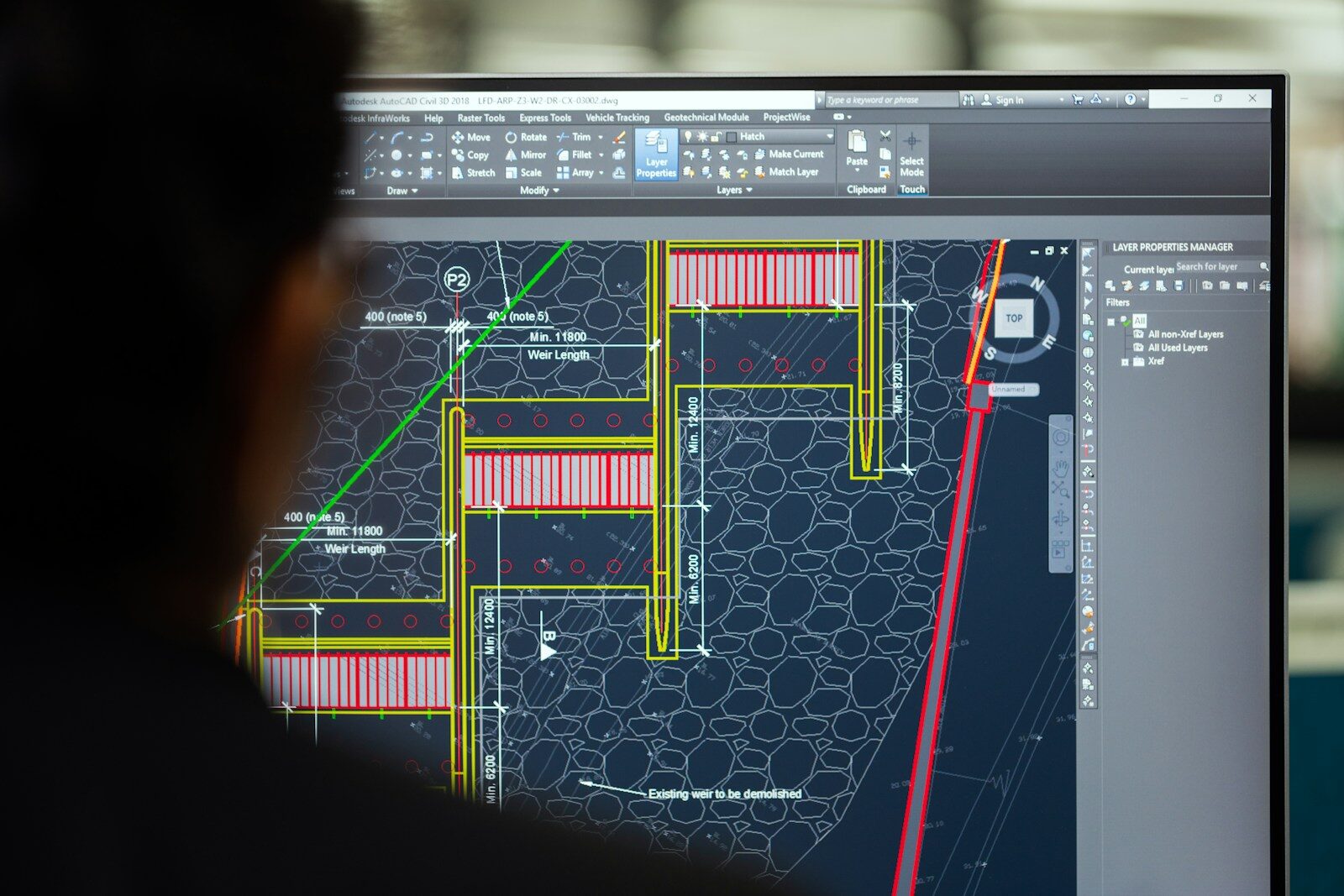
Photo by ThisisEngineering on Unsplash
What Is a Design Engineer?
A design engineer is a technical professional who helps create, evaluate, and improve the systems, components, drawings, and specifications that support a construction project. In commercial construction, this role often connects design ideas with practical building requirements.
A design engineer works closely with architects, project managers, a project engineer, other engineers, contractors, suppliers, and other designers to make sure the design can be built safely, efficiently, and within the project’s goals.
Depending on the project, a design engineer may help with:
- Reviewing design concepts
- Creating detailed designs
- Coordinating systems
- Developing technical drawings
- Reviewing materials
- Supporting cost estimates
- Identifying constructability concerns
- Helping solve field challenges
- Evaluating performance requirements
- Using computer-aided design software
- Supporting the overall design effort
In our work, this kind of coordination is especially important because many of our projects happen in occupied environments. A healthcare facility may need construction to happen with zero downtime. A senior living community may need renovations completed while residents remain on site. A school may need work phased around academic schedules. These are not projects where teams can afford unclear drawings, missing information, or disconnected systems.
Design Engineer Job Description in Construction
A basic job description for a design engineer usually includes technical design, problem-solving, documentation, coordination, and communication. In construction, the role is less about creating an isolated product and more about helping a building project function as a complete system.
A design engineer may help convert ideas into practical plans. That can include working with the design team to create drawings, develop designs, review specifications, and make sure materials perform as intended.
A design engineer’s responsibilities may include:
- Reviewing project requirements
- Understanding client goals
- Helping develop designs
- Coordinating with architects and engineers
- Reviewing technical aspects of building systems
- Supporting computer-aided engineering or computer-aided design work
- Writing reports
- Reviewing material options
- Supporting supplier development
- Helping find solutions when conflicts arise
- Supporting testing, mockups, or creating prototypes when needed
- Supervising technicians or coordinating with technical team members
While every project is different, the purpose of the role remains consistent: help the team create designs that are clear, functional, buildable, and aligned with the client’s needs.
Why Technical Skills Matter for a Design Engineer
Strong technical skills are at the center of design engineering. A design engineer needs to understand how systems work, how materials behave, and how design decisions affect construction, cost, schedule, safety, and long-term performance.
In construction, those skills may involve knowledge of:
- Building systems
- Structural coordination
- Mechanical systems
- Electrical and plumbing coordination
- Materials
- Code requirements
- Accessibility standards
- Construction sequencing
- Computer software
- Computer-aided design
- Computer-aided engineering
- Specifications
- Cost and performance tradeoffs
But technical knowledge alone is not enough. A design engineer also needs communication skills, writing skills, reasoning skills, and the ability to work with a team. The best technical solution still needs to be explained clearly, coordinated properly, and integrated into the broader project.
At SCIC, we know that clear communication is one of the biggest drivers of successful project delivery. When technical decisions are explained in a way that owners, property managers, developers, architects, and field teams can understand, the entire project benefits.
How Mechanical Engineering Connects to Modern Construction
Mechanical engineering is one of the areas where design engineering often intersects with construction. Mechanical systems affect heating, cooling, ventilation, plumbing, energy efficiency, comfort, safety, and long-term building performance.
In healthcare and senior living environments, these systems can be especially sensitive. Ventilation, temperature control, water systems, and equipment placement may directly affect patient care, resident comfort, staff workflow, and compliance requirements.
A design engineer with mechanical knowledge may help evaluate:
- HVAC system layouts
- Equipment placement
- Ventilation needs
- Energy efficiency opportunities
- System access for maintenance
- Coordination with ceilings, walls, and structural elements
- Cost estimates and performance options
- System conflicts before construction begins
When this coordination happens early, the project team can avoid delays, rework, and unnecessary disruption.
Design Engineer vs. Project Engineer
A project engineer and a design engineer often work closely together, but they do not always perform the same job.
A design engineer is typically more focused on the technical design, systems, drawings, specifications, and design solutions. A project engineer is often more focused on project coordination, documentation, submittals, RFIs, scheduling support, field communication, and making sure information moves properly between the office and the job site.
In a well-managed construction project, both roles support each other.
For example, a design engineer may help develop a technical solution for a building system. The project engineer may help coordinate that solution through submittals, field questions, schedule updates, and communication with the construction team.
Together, they help keep the project organized, accountable, and moving forward.
Analytical Thinking Helps Find Better Construction Solutions
Strong analytical thinking is one of the most valuable skills a design engineer brings to a project. Construction is full of moving parts, and every decision can affect cost, schedule, safety, function, and visual appeal.
A design engineer needs to look at the full picture.
Will this material hold up in a high-traffic space?
Can the system be installed without disrupting daily operations?
Does the design meet compliance requirements?
Will the layout support staff workflow?
Can the detail be built within the available budget?
Does the solution create future maintenance issues?
Can the project team access the area safely?
These are practical questions, not just technical ones.
Analytical thinking helps the team compare options, identify risks, and develop solutions that support both the design intent and the realities of construction.

Photo by UX Indonesia on Unsplash
Product Design and Construction Design: Where the Ideas Overlap
The phrase product design often brings to mind manufacturing, prototypes, machine design, or product design engineering technology. While commercial construction is different from manufacturing engineering, some of the same ideas still apply.
In both fields, a design engineer may need to:
- Convert ideas into detailed designs
- Understand how materials perform
- Use computer-aided design software
- Coordinate with other engineers
- Consider production or construction methods
- Create drawings
- Review components
- Test concepts
- Solve practical problems
- Balance function, cost, durability, and visual appeal
In manufacturing, the goal may be to create a product that can be produced repeatedly. In construction, the goal is often to create a building or space that fits a specific client, site, code environment, and use case.
At SCIC, that project-specific thinking matters. A senior living renovation, a healthcare upgrade, a hospitality buildout, and a historic restoration may all require different design solutions, even when some of the technical principles are similar.
The Role of Computer-Aided Design and Software
Modern design engineering relies heavily on computer software. Tools such as computer-aided design and computer-aided engineering help teams create drawings, test ideas, identify conflicts, and communicate design intent more clearly.
In construction, these tools may support:
- Space planning
- Building system coordination
- Drawing development
- Clash detection
- Technical documentation
- Design updates
- Material review
- Constructability planning
- Communication between architects, engineers, and builders
Technology helps, but it does not replace experience. Software can show where systems conflict, but the project team still needs the knowledge to interpret the issue, develop a solution, and understand how that solution affects the field.
That is why collaboration matters so much in modern construction.
Design Engineers Support Better Cost Estimates
A design engineer can also help improve cost planning. When technical requirements are understood early, cost estimates become more accurate and useful.
For example, a design engineer may help identify whether a material choice will increase installation time, whether a system requires additional support, or whether a design detail may create unexpected coordination issues.
This early insight can help clients make better decisions before construction begins.
At SCIC, we know our clients need clarity. Property managers, developers, institutional leaders, and capital planning teams are often responsible for complex budgets. The more accurate the information is during planning, the easier it is to make confident decisions.
Design Engineers Improve Constructability
A design that looks good on paper still needs to work in the field. Constructability is about making sure a project can be built efficiently, safely, and correctly.
A design engineer helps improve constructability by reviewing how different systems, materials, and details will come together during construction.
This may include looking at:
- Installation access
- Space constraints
- Existing conditions
- Building systems
- Material lead times
- Equipment requirements
- Safety concerns
- Code requirements
- Maintenance access
- Sequencing
- Occupied renovation challenges
This is especially important in the types of projects we specialize in. In occupied healthcare, senior living, education, and hospitality settings, construction teams often need to work around active operations. Better constructability planning helps reduce disruption and keep the project moving smoothly.
Average Salary, Career Outlook, and Why Experience Matters
Many people researching this role also look up average salary, career outlook, bachelor’s degree requirements, master’s degree options, labor statistics, and what most employers expect from design engineers.
Those details can be helpful for someone considering the profession. Many design engineers have education or hands-on experience in engineering, mechanical engineering, product design, construction, manufacturing processes, or related technical fields. Some roles may require a bachelor’s degree, while others may prefer advanced training, a master’s degree, or specialized software knowledge.
For clients, though, the most important question is not what a design engineer earns. The real question is whether the team involved in your project has the right experience, communication skills, problem-solving skills, and construction knowledge to protect your investment.
In commercial construction, experience matters because design decisions affect real spaces, real budgets, and real people.
Why Design Engineers Matter in Occupied Renovations
Occupied renovations require a higher level of coordination. When construction happens inside an active building, the project team has to think beyond the construction zone.
A design engineer may help the team plan around:
- Patient, resident, student, guest, or tenant access
- Temporary systems
- Phased construction
- Safety barriers
- Noise and dust control
- Utility shutdowns
- ADA compliance
- Infection control
- Staff workflow
- Emergency access
- Building operations
At SCIC, occupied renovations are one of our core strengths. We understand that our clients cannot simply pause operations while construction happens. A thoughtful design and construction process helps protect safety, reduce stress, and minimize disruption.
How Design Engineering Supports Design-Build Projects
In a design-build approach, collaboration starts earlier. Instead of separating design and construction into disconnected phases, the design-build model brings key voices together sooner.
That is where design engineering can provide major value.
When engineers, architects, builders, and owners work together early, the project team can identify problems before they become expensive. Design concepts can be tested against budget, schedule, existing conditions, material availability, and constructability.
This supports a more seamless project experience.
At South Coast Improvement Company, our single-source model is built around clarity and accountability. We provide pre-construction, design-build, construction management, and general contracting services to help clients move from planning to completion with confidence.
Design Engineers Help Turn Ideas Into Buildable Solutions
Every project starts with ideas. A client may want to modernize a healthcare wing, renovate a senior living community, improve a campus building, update a hotel, convert a commercial space, or preserve a historic property.
The design team helps shape those ideas. The construction team helps bring them to life. A design engineer helps connect the two by making sure the technical details support the vision.
That may mean helping create designs that improve performance, developing solutions for existing conditions, reviewing materials, or coordinating drawings so the final build reflects the original goal.
When that work is done well, the result is a space that looks better, functions better, and serves people better.

Photo by Paul White on Unsplash
Partner With a Construction Team That Understands the Details
A design engineer can play an important role in modern construction, but the strongest results come from an experienced team that knows how to coordinate every part of the process.
At South Coast Improvement Company, we bring a client-focused, single-source approach to complex commercial construction. Our team understands how to manage technical details, safety requirements, compliance needs, occupied renovations, and project schedules without losing sight of the client’s vision.
With over 90% repeat business, we are proud that our clients continue to trust us for projects where quality, communication, and reliability matter.
Whether you are planning a senior living renovation, healthcare project, educational improvement, hospitality update, commercial buildout, affordable housing project, or historic renovation, we are ready to help you start with clarity and move forward with confidence.
Get a Customized Project Plan.


