
Construction vehicles do much more than move dirt, lift materials, or haul debris. On a well-managed development site, they are part of a larger construction strategy.
At South Coast Improvement Company, we know that every successful construction project depends on planning, coordination, safety, and the right equipment at the right time. Whether we are working on a senior living renovation, healthcare facility, educational campus, hospitality property, affordable housing project, retail buildout, office improvement, or historic restoration, construction vehicles play a major role in keeping the job site moving.
From site prep and demolition to material handling, grading, utility installation, concrete work, and final cleanup, different construction vehicles help crews work safely and efficiently. But equipment alone does not create a successful project. It takes disciplined preconstruction planning, thoughtful site logistics, experienced crews, and a construction partner who understands how every moving part affects the schedule, budget, safety plan, and daily operations.
That is where our team brings real value.

Photo by Elizabeth Celestino on Pexels
Why Construction Vehicles Matter on Construction Projects
Construction vehicles are essential on many construction projects because they help crews perform work that would be unsafe, inefficient, or impossible by hand. These machines support heavy lifting, hauling, grading, demolition, land clearing, paving, site access, and material movement.
On development sites, construction vehicles may be used to:
- Move construction materials
- Transport heavy materials
- Load and unload bulk materials
- Support demolition projects
- Prepare stable ground
- Grade parking lots and access roads
- Install utility lines
- Move loose material
- Support deep foundations
- Assist with retaining walls
- Lift workers for elevated tasks
- Place concrete
- Clear land and remove debris
The right construction equipment improves operational efficiency because it helps multiple workers complete complex construction tasks with greater speed and control.
However, the wrong equipment, poor timing, or weak coordination can create delays, safety risks, blocked access, unnecessary costs, and disruption to surrounding operations.
That is why we treat construction vehicles as part of the overall project plan, not just tools that show up on the job site.
Construction Vehicles on Construction Sites Require Planning
Every construction site is different. A large open development site has very different equipment needs than an occupied healthcare facility, a senior living community, a tight urban project, or a historic property with limited access.
Before equipment arrives, our team looks at site logistics, sequencing, safety, access, staging, traffic flow, material storage, and surrounding operations.
We ask practical questions such as:
- What construction vehicles are needed for each phase?
- How will equipment enter and exit the site?
- Are there tight spaces or uneven surfaces to plan around?
- Will work take place near residents, patients, students, guests, or staff?
- Where can materials be stored safely?
- How will dump trucks or concrete mixer trucks access the site?
- Are there overhead power lines or nearby utility lines?
- Will soft ground or rough terrain affect equipment selection?
- How can we minimize disruption to the property?
- What safety barriers, signage, or traffic controls are needed?
This planning is especially important in occupied renovations. In senior living, healthcare, education, hospitality, and commercial environments, we often work while people continue using the building. That means construction vehicles must be managed carefully to protect safety, access, comfort, and continuity.
Key Features of Construction Equipment That Affect Job Site Performance
Different types of construction vehicles are designed for different construction tasks. Choosing the right machine depends on the site conditions, materials, space constraints, load requirements, schedule, and safety plan.
Some key features we consider include:
- Lifting power
- Load capacity
- Maneuverability
- Ground pressure
- Reach height
- Stability on rough terrain
- Ability to work on smooth surfaces
- Ability to fit in tight spaces
- Fuel or electric power options
- Attachment compatibility
- Operator visibility
- Safety controls
- Maintenance needs
- Impact on nearby operations
For example, skid steer loaders are useful in tight spaces because they are compact and flexible. Wheel loaders are helpful for moving large volumes of loose material. Boom lifts support elevated tasks when workers need to reach and flexibility. Rough terrain scissor lifts can support certain exterior access needs, while electric scissor lifts may be better for smooth indoor surfaces.
The right choice matters because construction vehicles affect productivity, safety, and schedule performance.
Material Handling and Construction Vehicles on Job Sites
Material handling is one of the most important functions of construction vehicles on job sites. Every construction project involves moving materials from one place to another, whether that means unloading deliveries, transporting supplies to a work area, hauling debris, or positioning heavy equipment.
Construction materials may include:
- Concrete
- Masonry units
- Steel
- Lumber
- Drywall
- Mechanical equipment
- Electrical materials
- Roofing materials
- Flooring
- Piping
- Bulk materials
- Demolition debris
- Other materials needed for the job
On large-scale projects, material movement may require multiple machines working together. On smaller or occupied job sites, we may need compact equipment that can work safely in limited floor space or around active building operations.
Good material handling reduces wasted time, protects materials, improves safety, and helps crews stay productive. Poor material handling can create clutter, hazards, damaged products, and schedule delays.
At SCIC, we plan material flow early so the job site stays organized and efficient.
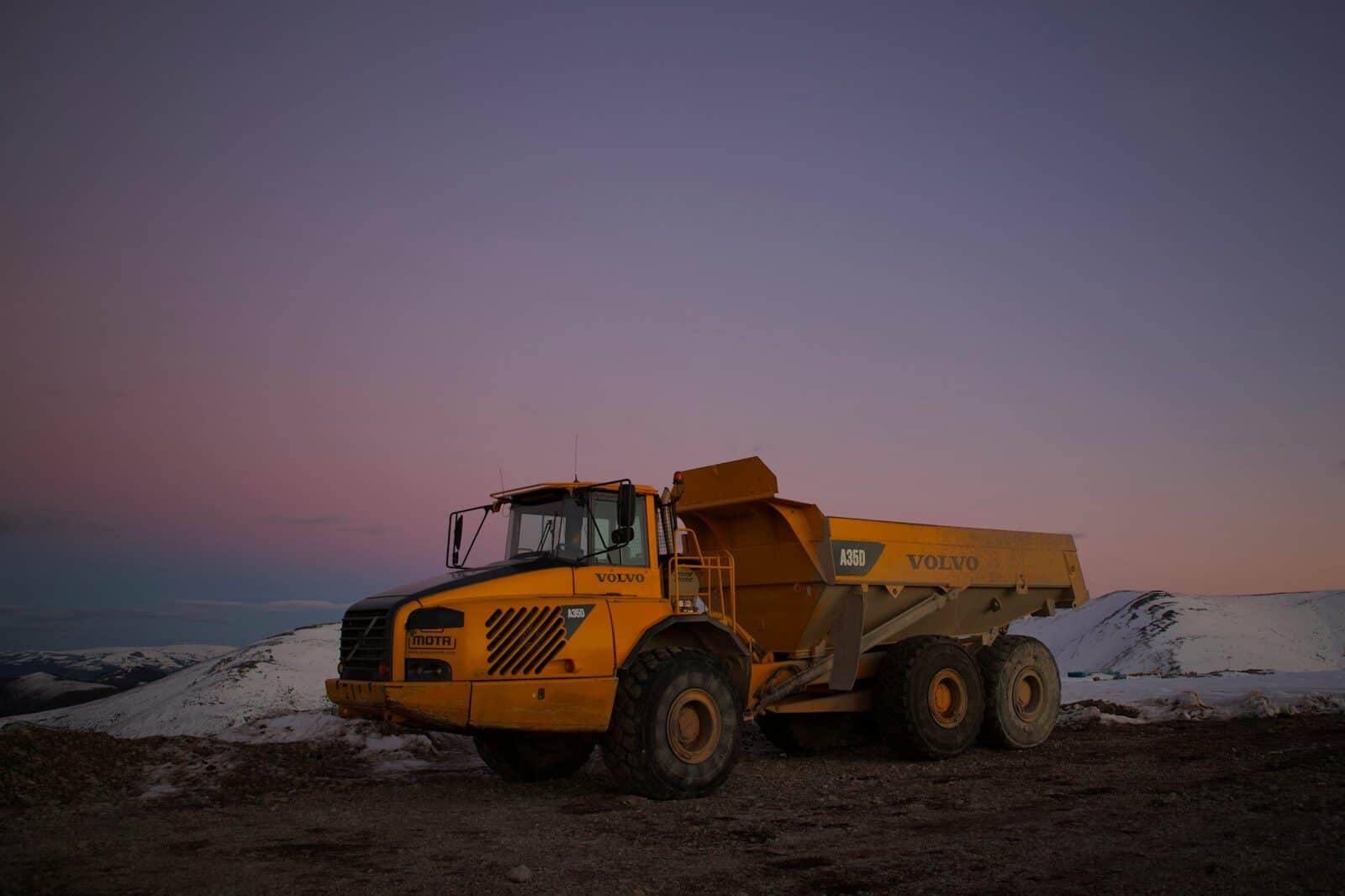
Photo by Ignacio Fernández Álvarez on Unsplash
Dump Trucks, Articulated Dump Trucks, and Construction Trucks
Dump trucks and construction trucks are some of the most common construction vehicles on development sites. They are used to transport materials, haul debris, remove soil, deliver aggregate, and support land clearing or demolition work.
Dump Trucks
Dump trucks are useful on many construction sites because they can carry heavy loads and dump material efficiently. They are often used for:
- Soil removal
- Demolition debris
- Stone and gravel delivery
- Land clearing
- Road construction support
- Site prep
- Parking lots
- Utility installation
- Bulk material transport
Dump trucks help keep a construction site moving by reducing the time and labor needed to transport large volumes of material.
Articulated Dump Trucks
Articulated dump trucks are often used when a site has rough terrain, soft ground, or uneven surfaces. Their design allows them to move more effectively across challenging conditions than standard road trucks.
These machines are especially useful on infrastructure projects, land development, large-scale projects, and sites where stable ground has not yet been fully established.
Construction Trucks
Construction trucks may include delivery trucks, haul trucks, mixer trucks, flatbeds, service trucks, and other vehicles used to support daily operations. Each one must be coordinated carefully so deliveries, hauling, and staging do not interfere with active work or property operations.
On urban projects or occupied sites, timing construction trucks correctly can prevent access problems, traffic issues, and disruption to residents, patients, guests, staff, or customers.
Heavy Equipment for Site Preparation and Demolition
Heavy equipment plays a major role in early construction phases. Before a building can go up or a renovation can begin, crews may need to clear land, remove existing structures, prepare foundations, grade the site, or install underground utilities.
Common heavy equipment may include:
- Excavators
- Bulldozers
- Wheel loaders
- Skid steer loaders
- Motor graders
- Smooth drum rollers
- Compact track loaders
- Backhoes
- Cranes
- Haul trucks
These specialized machines are designed for demanding work. Some are used for both digging and lifting. Others are used for grading, compacting, hauling, or moving heavy materials.
For demolition projects, equipment selection is especially important. Demolition work requires strict safety planning, dust control, debris management, and coordination with surrounding structures and utilities. In occupied or sensitive environments, this planning becomes even more important.
Our experience in occupied renovations helps us approach these phases carefully. We focus on safety, communication, phasing, and minimizing disruption.
Boom Lifts, Scissor Lifts, and Elevated Tasks
Not all construction tasks happen at ground level. Many projects require crews to work above floors, ceilings, rooflines, exterior walls, mechanical systems, lighting, windows, signs, or structural elements.
This is where boom lifts and scissor lifts become important.
Boom Lifts
Boom lifts are used when workers need to reach elevated or hard-to-access areas. They are common on exterior projects, façade work, roof access, structural repairs, signage, mechanical work, and high-ceiling spaces.
Boom lifts are helpful because they provide reach and flexibility. They can often move around obstacles and give workers access to areas that ladders or scaffolding may not reach as efficiently.
Scissor Lifts
Scissor lifts move vertically and provide a stable work platform for elevated tasks. Electric scissor lifts are often used on smooth indoor surfaces, while rough terrain scissor lifts are designed for outdoor or uneven surfaces.
Scissor lifts may be used for:
- Ceiling work
- Lighting installation
- Painting
- Mechanical and electrical tasks
- Fire protection work
- Interior renovations
- Warehouse and distribution centers
- Retail buildouts
- Hospitality renovations
The choice between boom lifts, scissor lifts, ladders, scaffolding, or other access equipment depends on the site, task, floor space, surface conditions, and safety plan.
Concrete Mixer Trucks and Mixer Truck Coordination
Concrete mixer trucks, sometimes called cement mixer trucks, play a key role when a project involves foundations, slabs, sidewalks, curbs, retaining walls, structural elements, or other concrete work.
A mixer truck keeps concrete moving so it can be delivered and placed before it sets. On a well-run job site, concrete delivery must be timed carefully. If the mixer truck arrives too early, the site may not be ready. If it arrives too late, crews may lose valuable time.
Concrete work often requires coordination between:
- Mixer truck delivery
- Concrete placement crews
- Pump trucks, if needed
- Finishers
- Testing and inspection
- Site access
- Weather conditions
- Traffic control
- Safety planning
On tight sites, urban projects, or occupied properties, concrete mixer trucks must be scheduled with even greater care. We think about where the truck will stage, how it will access the pour location, how crews will move around it, and how to protect the surrounding property.
Strong coordination keeps concrete work safe, efficient, and predictable.
Construction Vehicles in Tight Spaces and Occupied Sites
Some of the most challenging construction sites are not the biggest ones. Often, the most complex projects happen in tight spaces, active buildings, or properties that must stay operational during construction.
That includes:
- Senior living communities
- Healthcare facilities
- Schools
- Hotels
- Restaurants
- Retail centers
- Office buildings
- Historic properties
- Affordable housing communities
In these settings, construction vehicles need to be selected and managed with extra care. A machine that works well on an open site may not be appropriate near occupied entrances, narrow drives, limited parking lots, or areas with pedestrian traffic.
We plan for:
- Resident, patient, guest, or staff safety
- Temporary access routes
- Delivery timing
- Noise control
- Dust control
- Parking impacts
- Emergency access
- Work phasing
- Signage and barriers
- Communication with property leadership
This is one of the reasons clients come back to SCIC. We understand that construction success is not only about completing the work. It is about completing the work while protecting the people and operations around it.
Construction Vehicles and Safety in the Construction Industry
In the construction industry, safety is always a priority. Construction vehicles and heavy machinery can create serious hazards when they are not managed correctly.
Potential risks include:
- Struck-by hazards
- Blind spots
- Uneven surfaces
- Overhead power lines
- Utility lines
- Heavy loads
- Soft ground
- Tight access points
- Multiple workers are operating nearby
- Delivery traffic
- Pedestrian conflicts
- Equipment movement near occupied buildings
A strong safety plan includes trained operators, clear communication, traffic control, signage, barriers, spotters, PPE, equipment inspections, and daily coordination.
Predictive maintenance and regular equipment checks can also help reduce breakdowns, delays, and safety concerns. When equipment is maintained properly, the job site runs more smoothly.
At SCIC, safety and compliance are built into the way we plan and manage work. OSHA, ADA, regulatory requirements, and property-specific safety needs all matter.
Construction Equipment for Urban Projects and Large-Scale Projects
Urban projects and large-scale projects both require construction vehicles, but the planning can look very different.
On large-scale projects, the challenge may involve moving large volumes of material, coordinating multiple machines, managing multiple crews, and maintaining site productivity across a larger footprint.
On urban projects, the challenge is often access. There may be limited staging, tight streets, nearby buildings, restricted delivery windows, utility conflicts, pedestrians, traffic, and smaller work zones.
Each type of project requires a clear logistics plan.
For example:
- Urban projects may need smaller equipment, tighter delivery scheduling, and careful traffic coordination.
- Large-scale projects may need haul trucks, articulated dump trucks, motor graders, smooth drum rollers, and multiple machines working across different zones.
- Occupied renovations may need compact equipment, quieter work methods, phased deliveries, and extra safety barriers.
- Interior renovations may require electric scissor lifts, warehouse forklifts, walk-behinds, or specialized machines designed for smooth indoor surfaces.
The equipment plan should match the site, not the other way around.
Construction Vehicles for Utility Installation, Grading, and Site Work
Utility installation and grading are major parts of many development projects. Before a building can function, crews may need to install or modify utility lines, irrigation systems, stormwater systems, drainage, water service, electrical pathways, and other infrastructure.
Construction vehicles used for this work may include:
- Excavators
- Backhoes
- Skid steer loaders
- Wheel loaders
- Dump trucks
- Motor graders
- Compact equipment
- Trenchers
- Rollers
- Haul trucks
Grading equipment helps shape the site so water drains correctly, foundations are supported, roads and parking lots are properly prepared, and exterior areas are functional.
Smooth drum rollers may be used for compaction on paving projects or road construction. Motor graders may help create precise grades for roads, parking lots, or large site areas.
This work may not always be the most visible part of a project, but it is foundational to long-term performance.
How SCIC Coordinates Construction Vehicles From Preconstruction Through Completion
At SCIC, we believe successful construction starts before the first machine arrives on site. Our preconstruction and project management approach helps clients understand what needs to happen, when it needs to happen, and how each phase will affect the site.
We coordinate construction vehicles by looking at:
- Project scope
- Site access
- Existing conditions
- Safety needs
- Occupancy requirements
- Delivery schedules
- Material handling
- Equipment staging
- Work sequencing
- Labor coordination
- Inspection points
- Budget and schedule goals
- Long-term property needs
This planning helps reduce surprises. It also supports our larger goal: delivering seamless, client-focused construction solutions with clarity, accountability, and minimal disruption.
Our single-source model gives clients one accountable partner from planning through completion. That means fewer gaps, better communication, and stronger project control.

Photo by David McElwee on Pexels
Why Construction Vehicles Are Part of a Bigger Site Strategy
Construction vehicles matter because they directly affect job site performance. But they are only one part of the larger picture.
A successful development site depends on:
- Clear planning
- Strong communication
- Proper equipment selection
- Skilled operators
- Safe work zones
- Smart material handling
- Efficient scheduling
- Reliable subcontractor coordination
- Regulatory compliance
- Minimal disruption
- Quality control
- Post-construction support
When these pieces work together, construction vehicles help the project move forward safely and efficiently. When they are poorly coordinated, they can create bottlenecks, delays, and unnecessary risk.
At South Coast Improvement Company, we bring decades of experience across diverse sectors and complex environments. With over 90% repeat business, our clients trust us because we do more than manage construction tasks. We manage the full project experience.
Final Thoughts on Construction Vehicles and Development Site Success
Construction vehicles are essential to modern development sites. They support material handling, demolition, grading, hauling, utility installation, concrete placement, elevated work, land clearing, paving, and many other construction tasks.
But their real value comes from how they are planned, coordinated, and managed.
At SCIC, we understand that every machine on a job site affects safety, schedule, access, cost, and the people around the work. That is why we approach construction vehicles as part of a larger site logistics plan. From preconstruction through project completion, we focus on seamless delivery, regulatory compliance, operational continuity, and long-term value.
Whether you are planning a senior living renovation, healthcare project, educational facility, hospitality upgrade, affordable housing development, commercial office improvement, retail buildout, or historic restoration, our team is ready to help you build with confidence.
Schedule a Project Assessment Today.
View Our Work

Brookdale Battery Park City – Brookdale Senior Living
Carefully executed within an occupied senior living environment South Coast Improvement Company completed selective interior renovations at Brookdale Senior Living’s Battery Park City community, enhancing resident living spaces through targeted apartment upgrades. The...

Brookdale Cushing Park – Brookdale Senior Living
Critical 2-part phasing plan stayed within budget, on schdeule, & with no disruption to residents. South Coast Improvement successfully completed extensive renovations at Brookdale Cushing Park, a premier senior living community spanning over 100 acres in...


