
When owners, developers, and property managers begin planning a new project, one of the most important early decisions involves understanding the types of construction that may apply. In our industry, this is not just a technical detail. It affects safety, schedule, design, materials, cost, code compliance, and long-term building performance.
At South Coast Improvement Company, we know that successful projects start with smart planning. Whether we are helping clients with healthcare renovations, senior living improvements, hospitality upgrades, office buildouts, affordable housing, or adaptive reuse, we see firsthand how choosing the right construction type shapes the entire project. Different building types call for different strategies, and the more clearly that is understood upfront, the more confident owners can be moving forward.
View Our Work
Explore some of South Coast Improvement Company’s latest construction and renovation projects.

Brookdale Battery Park City – Brookdale Senior Living
Carefully executed within an occupied senior living environment South Coast Improvement Company completed selective interior renovations at Brookdale…
View Project
Brookdale Cushing Park – Brookdale Senior Living
Critical 2-part phasing plan stayed within budget, on schdeule, & with no disruption to residents. South Coast Improvement…
View Project
Village Clubhouse at Ann’s Choice
Occupied renovations were completed within an active Independent Living community with minimal disruption to residents and daily operations.…
View ProjectIn this article, we are breaking down the major types of building construction, why they matter, and how they influence real-world project planning.
Why Types of Construction Matter in Building Construction
The term building construction covers a wide range of project categories, materials, and code requirements. Not every building is designed or built the same way, and not every project should be approached the same way.
The International Building Code organizes buildings by construction classification, based largely on how well the major structural elements, building elements, and building materials can resist fire. These classifications help determine how a structure is expected to perform during a fire event and what kind of fire protection, fire suppression systems, and passive life safety features may be required.
This matters because everything from the primary structural frame to the roof construction, floor construction, bearing walls, interior walls, and exterior walls may need to meet a specific fire resistance rating or required fire resistance rating, depending on the building’s use, height, size, and occupant load.
In short, the different types of construction are not just labels. They are part of the foundation of good planning.
Fire Resistance and Why It Plays Such a Major Role
One of the biggest differences between construction classifications is fire resistance.
A building’s fire resistance rating refers to how long certain materials or assemblies can withstand fire while maintaining structural integrity. This helps determine how long the building’s structural components can continue to perform under fire conditions and whether they can help resist fire long enough to support evacuation and emergency response.
Some buildings use fire-resistant construction with highly durable, non-combustible materials like reinforced concrete, protected steel, and reinforced masonry walls. Others use more combustible materials, such as wood framing or wood panels, which may have different code requirements and performance characteristics.
Understanding fire-resistant design is especially important in sectors like healthcare, senior living, education, and hospitality, where occupant safety and continuity of operations matter even more. We work with clients in these environments all the time, and careful attention to fire safety is never optional. It is built into the planning from the start.

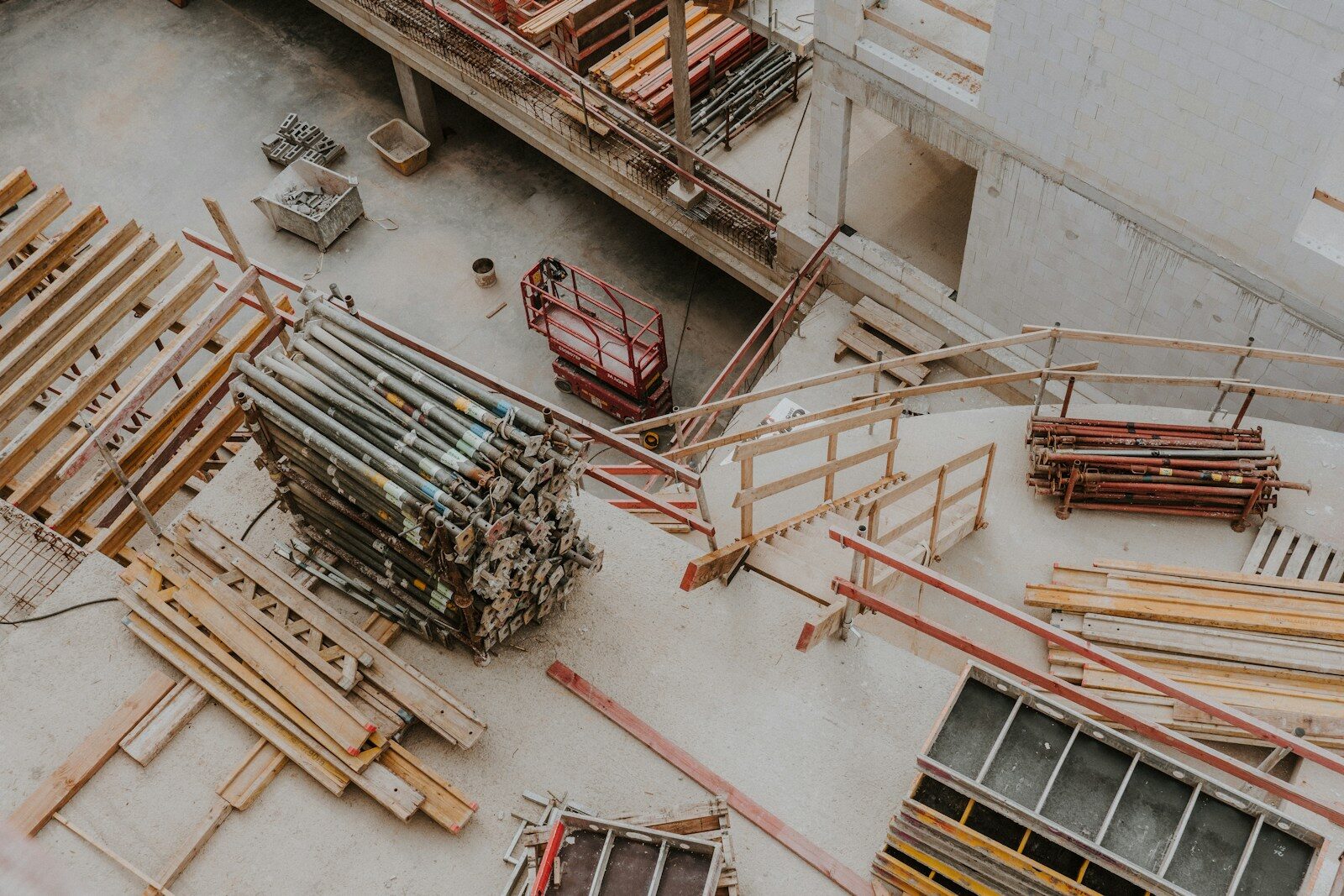
Photo by ThisisEngineering on Unsplash
The Five Main Building Types in the International Building Code
The International Building Code generally organizes structures into five main categories: Type I, Type II, Type III, Type IV, and Type V. Each one reflects a different combination of structural materials, fire-resistance expectations, and allowable uses.
Let’s look at the main building types and what they usually mean in practice.
Type I Construction and Fire Resistive Design
Type I construction is the most fire-resistant category and is often used for larger commercial buildings, hospitals, and certain high-occupancy institutional projects.
In type I construction, the building’s major structural systems are typically made of non-combustible construction materials such as steel and reinforced concrete. These i buildings are designed with strong fire-resistant performance in mind, and the major structural frame, floor systems, and other critical structural elements are required to meet a high fire resistance rating.
This category may also include protected steel with fire-resistant coatings, concrete floor assemblies, and well-designed compartmentation systems that help improve fire protection and preserve structural integrity during an emergency.
For owners planning hospitals, institutional properties, or larger mixed-use developments, Type I can offer important benefits, especially where life safety, long-term durability, and code compliance are major concerns.
Type II Construction for Many Commercial Buildings
Type II construction is also considered non combustible construction, but it typically provides a lower level of inherent fire resistance than Type I.
This construction type is common in commercial buildings such as schools, office space, certain medical facilities, and retail developments. The structure often uses steel, concrete, or masonry, but the required fire resistance rating for some building elements may be less demanding than in Type I.
Many office buildings, shopping centers, and other mid-size commercial properties may fall into this category. This makes Type II a practical choice for projects where owners want the benefits of non-combustible materials without the higher level of fire-resistive protection required for taller or more complex buildings.
When we work on these kinds of construction projects, the key is understanding how the code classification ties into design expectations, system coordination, and long-term building goals.
Type III Construction and Exterior Walls Requirements
Type III construction is often used for schools, mixed-use properties, municipal structures, and some apartment buildings.
In this type, the exterior walls are usually required to be made of non-combustible exterior walls, while certain interior parts of the structure may use combustible materials. That is why Type III is often associated with buildings that combine masonry exterior assemblies with wood roof or floor framing.
Many type III buildings have noncombustible exterior walls, but their interior structural elements, interior bearing walls, and roof assemblies may use wood or other combustible systems depending on the design. This creates a useful middle ground in the code, giving project teams flexibility while still maintaining important safety requirements.
Because of that mix, Type III often requires careful coordination between structural design, envelope detailing, and fire suppression systems.
Called Ordinary Construction: What Type III Often Means in Practice
Type III is sometimes called ordinary construction, especially when describing older masonry-and-wood systems.
You may also hear it described as ordinary construction or referred to historically through brick and joist structures. In these buildings, masonry exterior walls provide durability and some level of fire separation, while the internal framing may be built with wood joists, wood roof framing, or other combustible systems.
This is important in renovation and adaptive reuse work. Many older properties we encounter in urban or historic markets reflect this kind of building construction, and understanding what is called ordinary construction helps project teams plan improvements safely and accurately.
For historic and occupied renovations, knowing whether a building is Type III can influence everything from structural upgrades to fireproofing strategy to phasing and occupant protection.
Type IV Construction and Cross-Laminated Timber
Type IV construction, also known as heavy timber construction, has become increasingly relevant as mass timber systems gain traction in the construction industry.
Traditionally, type IV heavy timber buildings were made using large wood members such as solid or laminated wood, with thick sections that char slowly and maintain load-bearing ability longer than lighter framing systems. These type IV buildings may use heavy timber, laminated wood, and large structural members with limited concealed spaces.
Today, Type IV may also involve newer wood technologies like cross laminated timber. These materials allow owners and designers to explore sustainable, visually appealing, and high-performing systems while still meeting code requirements.
Projects using cross-laminated timber often appeal to clients seeking energy-conscious design, lower embodied carbon, and warm interior aesthetics with exposed wood. But they also require careful planning around code compliance, acoustic performance, moisture protection, and life safety.
As innovation continues, we expect industrial construction, institutional work, and some commercial markets to keep exploring mass timber as part of their project strategies.
Type V Construction and Type B Construction
Type V construction is the category that allows the greatest use of combustible framing, including wood frame construction.
This is commonly used in residential construction, smaller mixed-use properties, and low-rise buildings where wood framing offers speed, affordability, and flexibility. Wood frame systems can be very effective, especially when paired with strong detailing, energy-conscious envelopes, and the right fire safety measures.
You may also hear people refer to type V B construction or say type B construction when discussing specific subcategories. In general, these distinctions relate to the level of required fire protection built into the structural systems. A more protected variation may require more fire-rated assemblies, while a less protected variation may allow fewer ratings in certain components.
For project owners, the takeaway is simple: Type V construction can be efficient and cost-effective, but it must still be designed with care. Lightweight roof systems, combustible framing, and other wood-based assemblies need to be coordinated properly to support code compliance, performance, and safety.
Exterior Walls, Interior Walls, and Structural Elements
When evaluating a construction type, it is not enough to look only at the overall label. Owners also need to understand how the classification affects the building’s individual systems.
That includes:
- Exterior walls
- Interior walls
- Bearing walls
- Interior bearing walls
- Interior structural elements
- Structural frame
- Primary structural frame
- Floor construction
- Roof construction
Each of these building elements may have different requirements depending on the classification and building use. In some cases, the code may require non-combustible exterior walls with combustible interior framing. In others, the entire structural system may need to use non-combustible materials with a high required fire resistance rating.
This is one reason early planning matters so much. When owners understand how the classification affects these systems, they can make better decisions about cost, design, phasing, and long-term use.
Building Materials and How They Affect Project Strategy
The construction materials chosen for a project do more than shape appearance. They directly affect schedule, cost, coordination, maintenance, energy performance, and code compliance.
For example, reinforced concrete can offer durability, mass, and strong fire-resistant construction benefits. Masonry can support long-term performance and help create durable exterior walls. Steel systems can span large areas efficiently. Wood framing can speed up construction and control costs. Cross laminated timber can combine structural strength with sustainability and visual warmth.
The right answer depends on the project.
In our work, we help clients align structural materials and systems with their operational goals. A healthcare renovation may need a different material strategy than a hospitality repositioning, affordable housing development, or adaptive reuse project. Good planning means understanding not just what can be built, but what should be built.
Types of Construction in the Real Construction Industry
In the real construction industry, project categories go beyond code classifications alone.
When people talk about the types of construction in business terms, they often mean broad project segments such as:
- Residential
- Commercial
- Institutional
- Industrial construction
- Renovation
- Adaptive reuse
Each of these carries different risks, timelines, stakeholder expectations, and compliance demands.
For example, residential construction may prioritize speed, neighborhood fit, and affordability. Industrial construction may focus more on utility infrastructure, equipment coordination, and heavy-duty structural demands. Commercial interiors often revolve around brand standards, tenant requirements, and schedule compression. Institutional work may require a stronger focus on accessibility, continuity of operations, and public safety.
At SCIC, we work across many of these sectors, and we know that the best planning happens when owners choose a team that understands both code-driven building types and business-driven project realities.
Why the Same Construction Type Does Not Mean the Same Project Plan
Even when two buildings share the same construction type, they may still require very different project strategies.
A senior living renovation and a new office building may both fall under similar construction classifications, but they are not managed the same way. An occupied healthcare environment requires strict phasing, infection control, communication planning, and minimal disruption. A hotel renovation may require rapid turnover and guest experience protection. A retail rollout may focus on brand consistency and speed to market.
That is why we always encourage clients to look beyond classification alone.
The code tells you part of the story. The project environment, stakeholder needs, operational constraints, and long-term goals tell the rest.
How We Help Clients Plan with Confidence
At South Coast Improvement Company, we believe owners deserve more than a builder. They deserve a knowledgeable, accountable partner who can help them understand the full picture from early planning through final delivery.
We bring that mindset to every project. Our single-source model helps simplify decision-making, improve coordination, and reduce surprises. Our experience in occupied renovations and specialized commercial work helps clients move forward with confidence, especially when safety, compliance, and continuity matter most.
Whether the project involves healthcare, senior living, hospitality, education, affordable housing, office space, or historic properties, we focus on the details that protect your investment and support long-term value.

Final Thoughts on Types of Construction
Understanding the types of construction is one of the smartest ways owners can strengthen project planning from the beginning. Construction classifications influence fire resistance, fire safety, materials, structural systems, compliance, schedule, and cost. They also affect how teams approach design, coordination, and execution.
From type I construction and fire-resistant construction to type III construction, type IV heavy timber, and type V construction, each option brings its own opportunities and responsibilities. The best choice depends on the building’s use, code requirements, performance goals, and long-term vision.
That is where the right construction partner matters.
If you are planning a new build, renovation, adaptive reuse project, or facility upgrade, we are here to help you make informed decisions every step of the way.


